Introduction
When managing applications in production, one of the key patterns used in Kubernetes deployments is the Operator pattern.
To understand the Operator pattern, we need to first look at the complexity of running certain applications.
For example, let’s say you want to run a MySQL cluster.
A MySQL cluster often needs 3, 5, or 7 instances (pods) working together to maintain quorum. They coordinate, elect a leader, handle sync, failures, scaling, backups, and more.
Regular Kubernetes objects like Pods, StatefulSets, Services, ConfigMaps, etc., give you the basic building blocks.
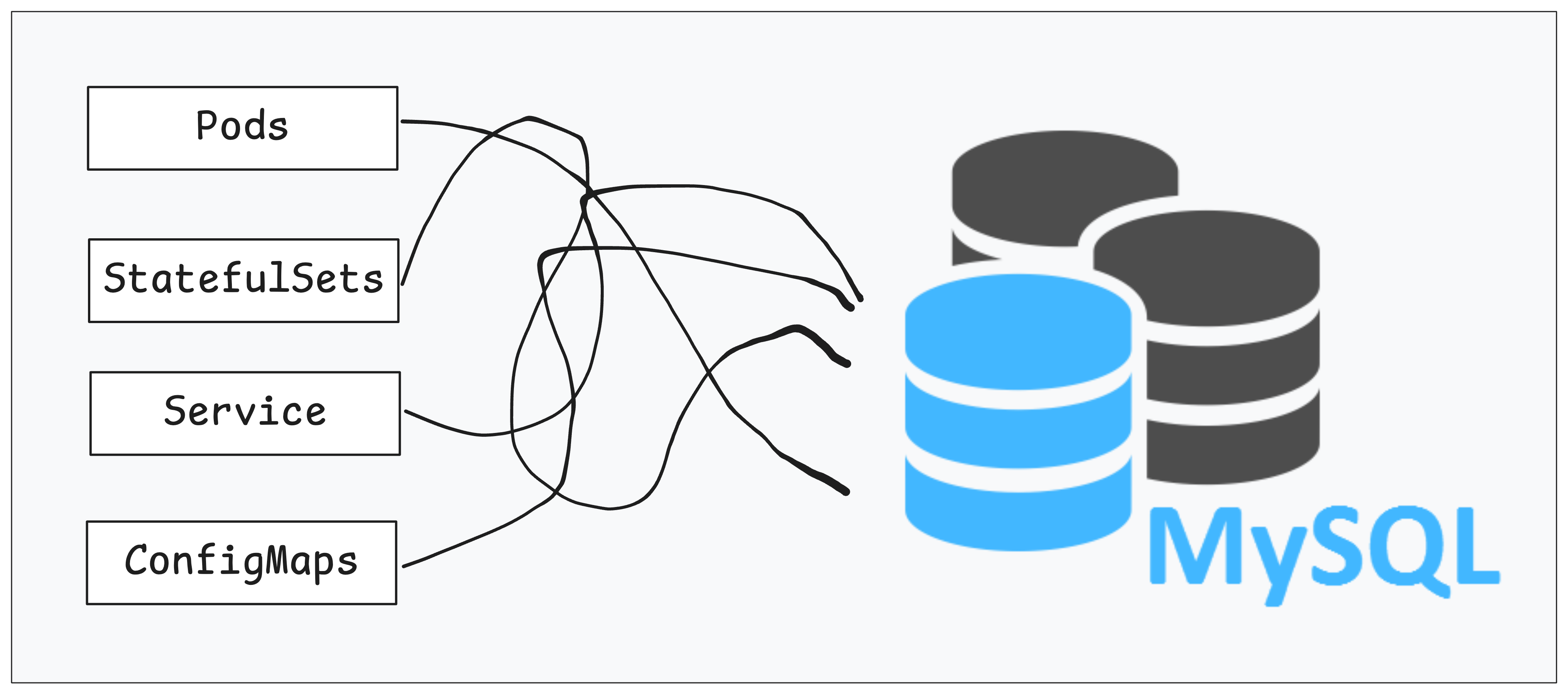
But they do not know the special rules MySQL needs.
For example, startup order, replication configuration, failure recovery, version upgrades, backup schedules, promotion logic, TLS, and cluster-wide configuration.
So to run a MySQL cluster on Kubernetes, you would end up writing and maintaining a lot of custom shell scripts, Helm templates, and manual steps for replication setup, failover handling, backup automation, and recovery procedures.
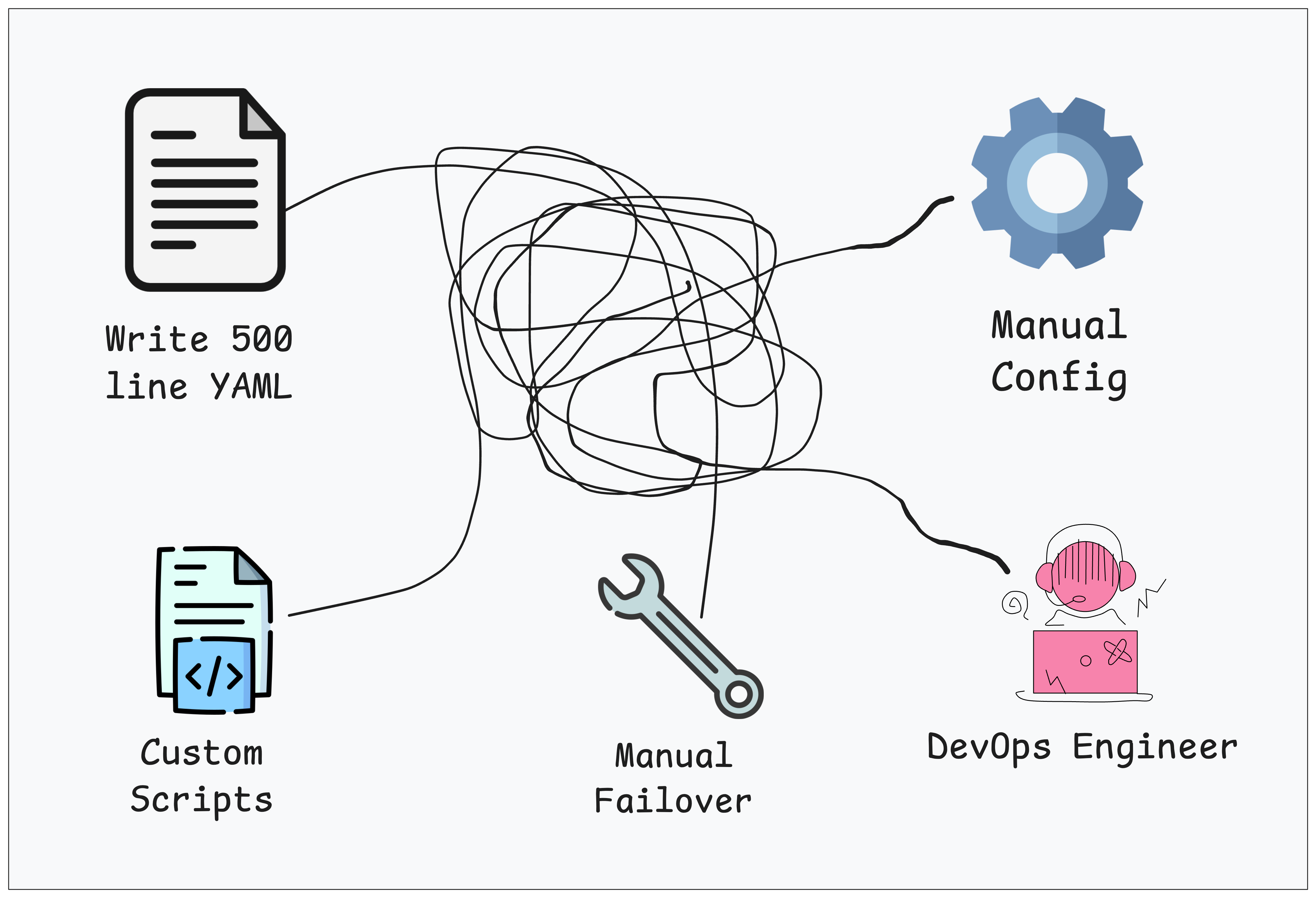
During node failures, pod restarts, or version upgrades, the cluster can easily become unstable, and you must fix it manually.
Even on VMs, maintaining a MySQL cluster is complex.
In 2016, a company called CoreOS introduced the "Operator" pattern. They realized that human operators (sysadmins) were manually performing these complex tasks. They asked: Why not write code that acts like a human operator?
What if Kubernetes offered a way to automate the deployment and management of such applications using Kubernetes-style operations?
That is where the Kubernetes Operator pattern comes in.
An operator is essentially a software robot that sits inside your cluster, watches your specific application, and uses "human" knowledge encoded in code to fix, update, or back up that application automatically.
You teach it the MySQL operational rules, like how to configure replication, how to handle failover, perform backups, create databases, create users, scale safely, and manage upgrades.
So, instead of writing SQL scripts or fixing issues manually, the Operator watches the desired state you define and keeps the cluster in that state automatically.
I know it may sound a little vague right now, but it will make more sense as we go deeper.
In the upcoming lessons, we will explore these concepts using the same MySQL example so it becomes easy to understand.
In the next lesson, we will cover some basics on Kubernetes objects vs. Kubernetes Resources. This foundation is important to understand how Operators work.